Best Bronchoscopy Treatment in Thane
- Treatments
- BronchoscopyBronchoscopy
- EBUS-TBNAEBUS-TBNA
- Transbronchial Lung BiopsyTransbronchial Lung Biopsy
- Semi-Rigid Medical ThoracoscopySemi-Rigid Medical Thoracoscopy
- ThoracentesisThoracentesis
- Intercostal Drain InsertionIntercostal Drain Insertion
- Pigtail Catheter InsertionPigtail Catheter Insertion
- PleurodesisPleurodesis
- Closed Pleural BiopsyClosed Pleural Biopsy
- USG & CT Guided Lung Mass BiopsyUSG & CT Guided Lung Mass Biopsy
- Sleep StudySleep Study
- Pulmonary Function TestingPulmonary Function Testing
- Post-COVID RehabilitationPost-COVID Rehabilitation
- Pulmonary Hypertension ClinicPulmonary Hypertension Clinic
- Smoking Cessation TherapySmoking Cessation Therapy
Bronchoscopy
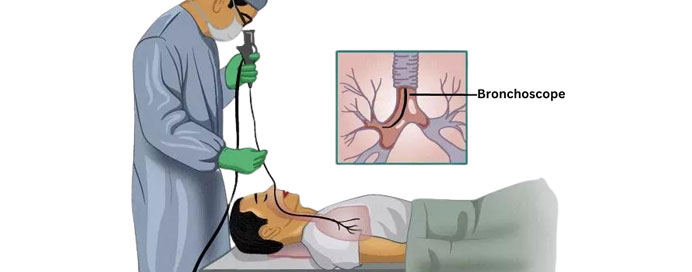
Bronchoscopy is a minimally invasive procedure that allows doctors to examine the airways and lungs using a thin, flexible tube called a bronchoscope. It helps identify the cause of persistent cough, recurrent infections, bleeding, abnormal X-ray or CT scan findings, and suspected lung diseases. The procedure also enables doctors to collect tissue samples (biopsy), perform therapeutic interventions, remove mucus plugs or foreign bodies, and deliver targeted treatments directly inside the airways. It is generally safe, well-tolerated, and performed under local anesthesia with mild sedation to ensure comfort.
Purposes of Bronchoscopy
- To diagnose chronic cough, airway infections, bleeding, or blockages.
- To evaluate conditions like tuberculosis, lung cancer, pneumonia, or ILD.
- To confirm abnormal findings seen on chest X-ray or CT scan.
- To obtain tissue or fluid samples for accurate diagnosis.
- To remove mucus plugs, tumors, or foreign bodies from the airway.
How the Procedure Is Done
- The patient receives mild sedation and a numbing spray for comfort.
- A flexible bronchoscope is inserted through the nose or mouth into the airway.
- The doctor visualizes the trachea, bronchi, and lung passages on a live screen.
- Fluid washing (BAL), biopsy, or sample collection is performed if needed.
- The entire procedure usually takes 15–30 minutes and is safe and well-tolerated.
Benefits of Bronchoscopy
- Provides a clear and direct view of the airways and lungs.
- Helps achieve an accurate and timely diagnosis.
- Enables early detection of serious conditions such as cancer or TB.
- Allows therapeutic procedures like removing blockages or controlling bleeding.
- Quick recovery with minimal discomfort and high safety.