Best Closed Pleural Biopsy Treatment in Thane
- Treatments
- BronchoscopyBronchoscopy
- EBUS-TBNAEBUS-TBNA
- Transbronchial Lung BiopsyTransbronchial Lung Biopsy
- Semi-Rigid Medical ThoracoscopySemi-Rigid Medical Thoracoscopy
- ThoracentesisThoracentesis
- Intercostal Drain InsertionIntercostal Drain Insertion
- Pigtail Catheter InsertionPigtail Catheter Insertion
- PleurodesisPleurodesis
- Closed Pleural BiopsyClosed Pleural Biopsy
- USG & CT Guided Lung Mass BiopsyUSG & CT Guided Lung Mass Biopsy
- Sleep StudySleep Study
- Pulmonary Function TestingPulmonary Function Testing
- Post-COVID RehabilitationPost-COVID Rehabilitation
- Pulmonary Hypertension ClinicPulmonary Hypertension Clinic
- Smoking Cessation TherapySmoking Cessation Therapy
Closed Pleural Biopsy
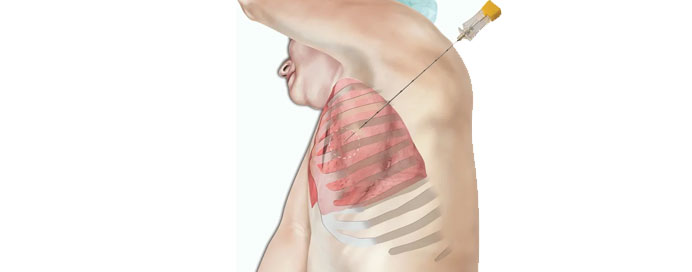
Closed Pleural Biopsy is a minimally invasive procedure performed to obtain small tissue samples from the pleura—the thin membrane surrounding the lungs. It is done using a special needle (such as Abrams or Cope needle) and is especially useful in diagnosing conditions like tuberculosis, malignancy, chronic pleural inflammation, or unexplained pleural effusion. The biopsy provides valuable pathological information and helps guide targeted treatment, often avoiding the need for more invasive surgical procedures.
Why Closed Pleural Biopsy Is Performed
- To diagnose tuberculosis-related pleural inflammation when fluid tests are inconclusive.
- Helps detect cancers such as mesothelioma or metastatic disease.
- Useful when pleural effusion persists without a clear cause.
- Assists in understanding chronic or recurrent pleural thickening.
- Provides essential diagnostic clarity without needing thoracoscopy or surgery.
What the Procedure Involves
- The patient is positioned sitting upright or lying slightly sideways for better access.
- The skin area is cleaned and numbed with local anesthesia to ensure comfort.
- A biopsy needle is introduced carefully into the pleural space under guidance or landmark technique.
- Multiple small tissue samples are taken to increase diagnostic accuracy.
- Samples are sent for histopathology, TB testing, and other specialized analyses.