
Best Doctor For Thoracentesis in Thane
- Treatments
- BronchoscopyBronchoscopy
- EBUS-TBNAEBUS-TBNA
- Transbronchial Lung BiopsyTransbronchial Lung Biopsy
- Semi-Rigid Medical ThoracoscopySemi-Rigid Medical Thoracoscopy
- ThoracentesisThoracentesis
- Intercostal Drain InsertionIntercostal Drain Insertion
- Pigtail Catheter InsertionPigtail Catheter Insertion
- PleurodesisPleurodesis
- Closed Pleural BiopsyClosed Pleural Biopsy
- USG & CT Guided Lung Mass BiopsyUSG & CT Guided Lung Mass Biopsy
- Sleep StudySleep Study
- Pulmonary Function TestingPulmonary Function Testing
- Post-COVID RehabilitationPost-COVID Rehabilitation
- Pulmonary Hypertension ClinicPulmonary Hypertension Clinic
- Smoking Cessation TherapySmoking Cessation Therapy
Thoracentesis
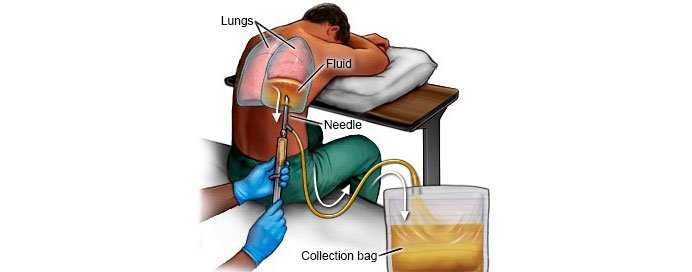
Thoracentesis is a minimally invasive procedure performed to remove excess fluid from the pleural space, helping patients breathe better and enabling doctors to diagnose the underlying cause of pleural effusion. Guided by ultrasound for maximum safety, it provides quick relief from symptoms like breathlessness and chest tightness while giving valuable clinical information from the collected fluid.
Why This Procedure Matters
- Detects the cause of pleural effusion such as infection, heart failure, or malignancy.
- Immediately reduces pressure on the lungs, improving breathing.
- Performed using ultrasound guidance for accuracy and safety.
- Collected fluid is tested for biochemical, microbiological, and cytological analysis.
- Usually completed within a short time and often as an outpatient procedure.
How the Procedure is Performed
- Patient sits upright, slightly leaning forward.
- The skin area is cleaned and numbed with local anesthesia.
- A fine needle or catheter is inserted into the pleural space.
- Fluid is gently withdrawn into sterile collection bottles.
- A post-procedure chest X-ray may be done to ensure everything is normal.
Benefits for the Patient
- Rapid improvement in breathlessness.
- Helps in diagnosing infections, cancers, and inflammatory conditions.
- Avoids the need for more invasive surgeries.
- Guides further treatment such as antibiotics, diuretics, or pleural interventions.