Best Doctor for Sarcoidosis in Thane
- Diseases
- AsthmaAsthma
- COPDCOPD
- Interstitial Lung DiseaseInterstitial Lung Disease
- PneumoniaPneumonia
- Sleep ApneaSleep Apnea
- Bronchitis & Chronic CoughBronchitis & Chronic Cough
- Pulmonary FibrosisPulmonary Fibrosis
- TuberculosisTuberculosis
- SarcoidosisSarcoidosis
- Lung Cancer EvaluationLung Cancer Evaluation
- Pleural EffusionPleural Effusion
- PneumothoraxPneumothorax
- Pulmonary EmbolismPulmonary Embolism
- ARDSARDS
- Allergic Lung DiseasesAllergic Lung Diseases
- Post-COVID Lung DiseasePost-COVID Lung Disease
- Occupational Lung DiseasesOccupational Lung Diseases
Sarcoidosis
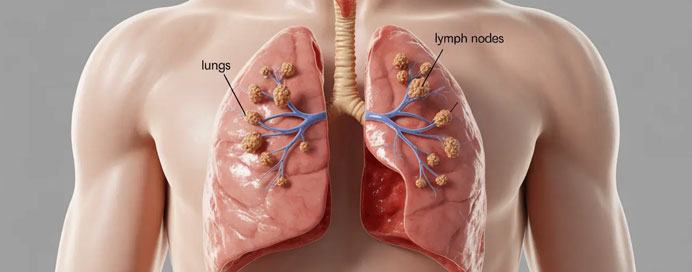
Sarcoidosis is an inflammatory disease in which small clusters of immune cells, called granulomas, form in various organs, most commonly the lungs and lymph nodes. This causes organ inflammation and can affect normal function. The exact cause is unknown but is believed to involve an abnormal immune response to environmental or infectious triggers. Symptoms vary widely, and early diagnosis with imaging, pulmonary function tests, and sometimes biopsy is essential. Treatment focuses on controlling inflammation and managing symptoms to prevent long-term organ damage.
- Persistent dry cough and shortness of breath
- Fatigue and generalized weakness
- Chest pain or discomfort
- Unexplained weight loss or loss of appetite
- Treatment with corticosteroids or immunosuppressive medications, along with regular monitoring