Best Transbronchial Lung Biopsy Treatment in Thane
- Treatments
- BronchoscopyBronchoscopy
- EBUS-TBNAEBUS-TBNA
- Transbronchial Lung BiopsyTransbronchial Lung Biopsy
- Semi-Rigid Medical ThoracoscopySemi-Rigid Medical Thoracoscopy
- ThoracentesisThoracentesis
- Intercostal Drain InsertionIntercostal Drain Insertion
- Pigtail Catheter InsertionPigtail Catheter Insertion
- PleurodesisPleurodesis
- Closed Pleural BiopsyClosed Pleural Biopsy
- USG & CT Guided Lung Mass BiopsyUSG & CT Guided Lung Mass Biopsy
- Sleep StudySleep Study
- Pulmonary Function TestingPulmonary Function Testing
- Post-COVID RehabilitationPost-COVID Rehabilitation
- Pulmonary Hypertension ClinicPulmonary Hypertension Clinic
- Smoking Cessation TherapySmoking Cessation Therapy
Transbronchial Lung Biopsy
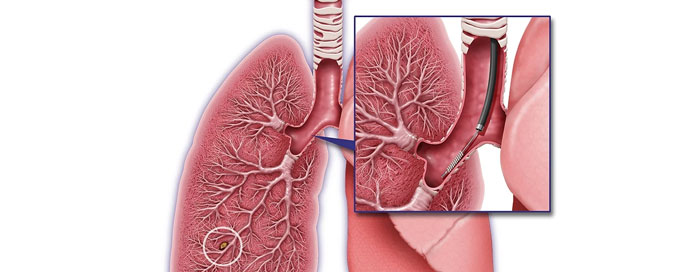
Transbronchial Lung Biopsy (TBLB) is a minimally invasive procedure performed during bronchoscopy to obtain small tissue samples from the deeper areas of the lungs. It helps diagnose various lung diseases by allowing doctors to examine lung tissue under a microscope. During the procedure, a flexible bronchoscope is guided into the airways, and tiny forceps are used to collect biopsy samples. TBLB is commonly used to evaluate conditions such as interstitial lung disease, sarcoidosis, infections, and suspected malignancies. It is safe, effective, and offers valuable diagnostic information without requiring open surgery.
Why TBLB Is Performed
- To diagnose interstitial lung diseases (ILD) such as fibrosis.
- To identify granulomatous diseases like sarcoidosis or TB.
- To evaluate unexplained lung nodules or abnormal CT scan findings.
- To detect infections that require tissue confirmation.
- To assess suspected lung cancer when less invasive tests are insufficient.
How the Procedure Is Done
- The patient receives mild sedation and throat numbing for comfort.
- A flexible bronchoscope is gently inserted through the mouth or nose.
- The doctor advances biopsy forceps into specific areas of the lung.
- Small tissue samples are collected for laboratory analysis.
- The procedure usually takes 20–30 minutes with short recovery time.
Benefits of TBLB
- Provides accurate tissue diagnosis for many lung conditions.
- Minimally invasive compared to surgical lung biopsy.
- Helps identify early-stage diseases for timely treatment.
- Low recovery time with minimal discomfort.
- Reduces the need for hospitalization or open surgery.