
Best Intercostal Drain Insertion Doctor in Thane
- Treatments
- BronchoscopyBronchoscopy
- EBUS-TBNAEBUS-TBNA
- Transbronchial Lung BiopsyTransbronchial Lung Biopsy
- Semi-Rigid Medical ThoracoscopySemi-Rigid Medical Thoracoscopy
- ThoracentesisThoracentesis
- Intercostal Drain InsertionIntercostal Drain Insertion
- Pigtail Catheter InsertionPigtail Catheter Insertion
- PleurodesisPleurodesis
- Closed Pleural BiopsyClosed Pleural Biopsy
- USG & CT Guided Lung Mass BiopsyUSG & CT Guided Lung Mass Biopsy
- Sleep StudySleep Study
- Pulmonary Function TestingPulmonary Function Testing
- Post-COVID RehabilitationPost-COVID Rehabilitation
- Pulmonary Hypertension ClinicPulmonary Hypertension Clinic
- Smoking Cessation TherapySmoking Cessation Therapy
Intercostal Drain Insertion
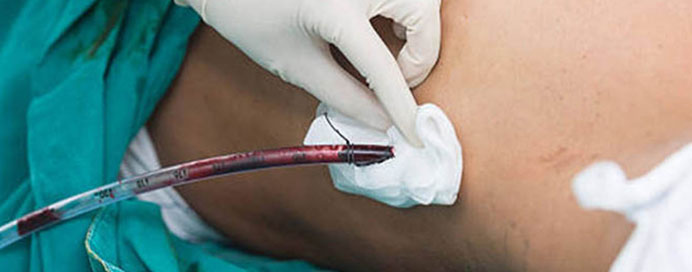
Intercostal Drain (ICD) Insertion is a crucial procedure used to remove accumulated air, fluid, blood, or pus from the pleural cavity, allowing the lungs to re-expand and function normally. The procedure involves placing a sterile tube between the ribs into the pleural space under local anesthesia or sedation. It is commonly required in emergencies like pneumothorax, large pleural effusions, hemothorax, or infections such as empyema. ICD insertion not only provides immediate relief from breathlessness but also plays a significant role in stabilizing the patient and preventing life-threatening complications.
- Ensures lung re-expansion by removing trapped air or fluid: ICD insertion effectively evacuates air in pneumothorax or fluid in pleural effusion, reducing pressure on the lung and helping it re-inflate, which improves oxygenation and breathing capacity.
- Performed in the safe triangle to minimize complications: The tube is inserted in a specific anatomical region known as the “safe triangle,” which avoids major nerves and blood vessels, making the procedure safer and reducing the risk of injury.
- Uses local anesthesia or sedation for patient comfort: Most procedures are done under local anesthesia, ensuring minimal discomfort, while anxious or severely ill patients may receive mild sedation for added comfort during the process.
- Connected to an underwater seal system for controlled drainage: The ICD is attached to a specialized drainage system that prevents backflow of air or fluid into the chest and ensures continuous, controlled drainage until the lung fully re-expands.
- Requires regular monitoring and chest imaging: Healthcare providers closely monitor the drainage amount, air leak, and patient’s symptoms. Chest X-rays or ultrasound are used to confirm correct tube placement and assess lung expansion throughout treatment.